What a Yellowstone snowcoach is, and how it rides
A snowcoach is the vehicle most winter visitors ride to Old Faithful, and it is unlike anything you drive at home. It is warm and slow, and a little bumpy, with a guide at the wheel who stops for bison and steam. Some are vintage yellow coaches with rounded windows, others are modern vans on tracks. This guide explains what you are getting into before you book a seat.
A heated cabin on tracks or skis
A snowcoach is an enclosed, heated vehicle built to run on snow rather than pavement. Depending on the model it runs on tracks or skis, and some newer ones roll on very large tires instead. Most carry somewhere between 8 and 25 passengers.
In Yellowstone they travel on the interior roads after the park has groomed them for oversnow vehicles, from about mid-December to mid-March. The seats feel much like a minibus, with windows on both sides and a driver up front who is usually also your guide.
Snowcoaches share the groomed roads with guided snowmobiles, and cars are kept off them all winter. From the west or south entrances, one of those two is how you reach places like Old Faithful. Weighing the two? See our comparison of the ways in.
From Quebec to the geyser basins
The classic snowcoach comes from Quebec. Joseph-Armand Bombardier built snow vehicles there, and the company he founded made the boxy yellow coaches with round-cornered windows that became the face of winter Yellowstone.
They have carried visitors in the park since the 1950s, and a few still run, many of them restored. Riding one feels a little like sitting in a vintage bus that learned to swim through snow.
Most coaches on the road today are newer and quieter than the old models, with more room inside. They are vans or small buses fitted with track conversions or very large tires.
BrushBuck's and Horizon Travel Team's listings describe a heated snowcoach but do not name the model, so we cannot tell you which type you will get. Ask the operator when you book if it matters to you.
What the ride feels like
Slow, first of all. Snowcoaches rarely go faster than about 35 mph (56 km/h), and often much less. Once you count the stops, the 30 miles (48 km) or so from West Yellowstone to Old Faithful take a good part of the morning.
The snow road is groomed, but it develops ridges like a washboard as the day goes on, and you will feel them in your back. People prone to motion sickness should sit near the front.
Inside it is warm, sometimes too warm once you are dressed for 0 °F (−18 °C) outside. Plan to shed a layer on board and put it back on at every stop.
All that breathing fogs the windows, so a cloth in your pocket helps for photos through the glass.
Between stops the driver talks about geology and animals, and on a good tour the commentary is half the value. Reviewers of BrushBuck praise guides such as Neil and Andrew by name.
Where a snowcoach stops
A snowcoach day is a string of short stops linked by slow driving. BrushBuck and Horizon come in from the west along the Madison River and stop at Fountain Paint Pot in the Lower Geyser Basin. Their arrival at Old Faithful is timed to the predicted eruption.
Scenic Safaris approaches from the south instead, visiting Moose Falls and the West Thumb Geyser Basin by Yellowstone Lake before Old Faithful. Old Faithful in winter by snowcoach walks through both routes.
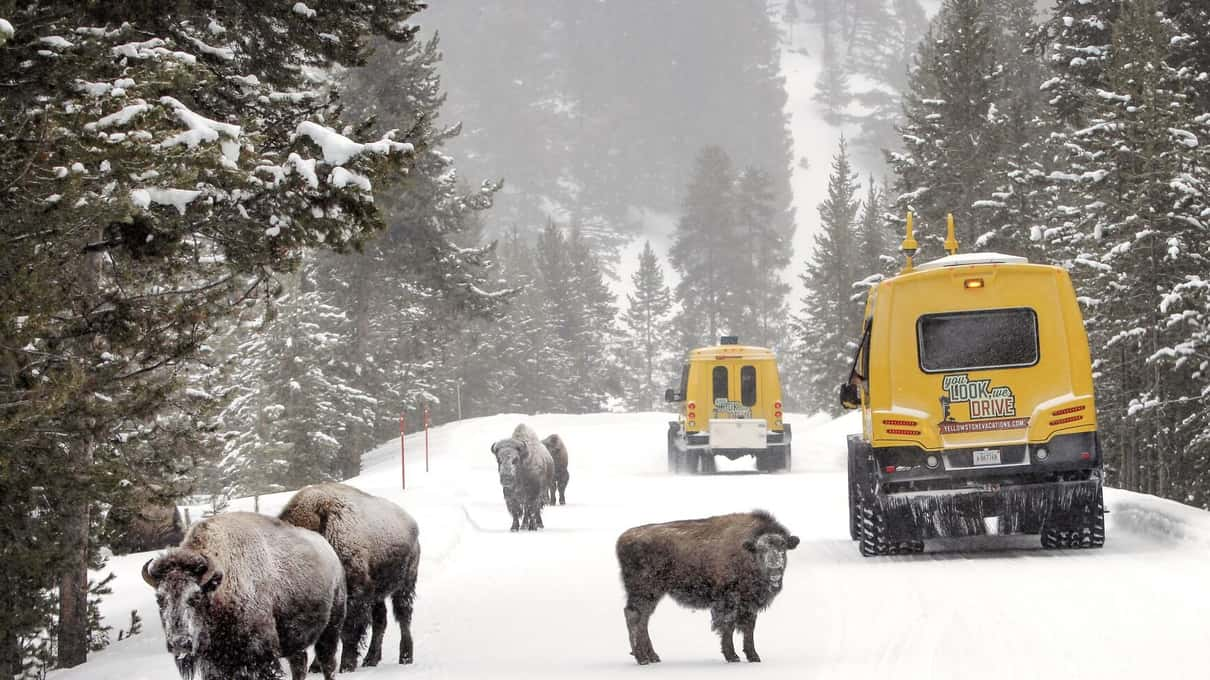
Wildlife sets its own stops. Bison walk the groomed roads in winter because it is easier than wading through deep snow, and a snowcoach simply waits until they move on.
Nobody can promise which animals you see, but bison on the road are common enough that most guests have a story. The wildlife guide has more on that. Restrooms? The tours use warming huts on the way and the facilities at Old Faithful.
A full snowcoach day from Jackson
Scenic Safaris spends about 12 hours going from Jackson to Old Faithful and back, from ~$550. The price includes meals and park fees. Refunds are not offered, and Viator confirms the seat only once you have booked.
Getting a good seat
Ask for a window. Most of the day you are looking out at steam rising from the rivers and bison in the snow. An aisle seat with fogged glass between you and the view makes for a long ride, so mention it when you check in.
Sit on the same side all day and you will see one half of the route twice. Swapping with your neighbor after lunch is common and polite.
Cold drains batteries fast. Keep your camera and spares in an inside pocket, and see what to wear on a Yellowstone winter tour for the rest of the kit.
Why the park uses them
Yellowstone limits how many oversnow vehicles enter the park each day and requires most of them to travel with a commercial guide. Snowcoaches carry many people per vehicle, so they keep the numbers low and the noise down.
The result is an interior that stays quiet in winter, with long stretches where you hear nothing but the engine and the snow.
That limit is also why seats are scarce. Check when the snowcoach season runs before you settle your dates.
Other ways to ride over snow
A snowcoach is not the only classic winter ride in the region. In Jackson, the National Elk Refuge sleigh ride, from ~$43, puts you on a horse-drawn sleigh among thousands of wintering elk for 45–60 minutes.
It is rated 4.7 from 250+ reviews, with one weak spot. When snow is thin it swaps the sleigh for a wagon, which rides rougher.
Want more days? Nomad Unlimited Adventure, from ~$2,780, offers five winter days out of Salt Lake City in Yellowstone and Grand Teton. With only two reviews and a thin listing behind it, ask before you commit.
BrushBuck's four days from Jackson (from ~$2,089) include a snowcoach day. So do Scenic Safaris' day from Jackson and Horizon Travel Team's three days from Salt Lake City.
Yellowstone Hiking Guides is the odd one out. It drives the open northern road in a heated vehicle on wheels, not a snowcoach.
Prices for all of them are in what a Yellowstone snowcoach tour costs, and multi-day winter tours with a snowcoach day compares the two longer trips.